Blog

Showing 31-40 of 40 articles

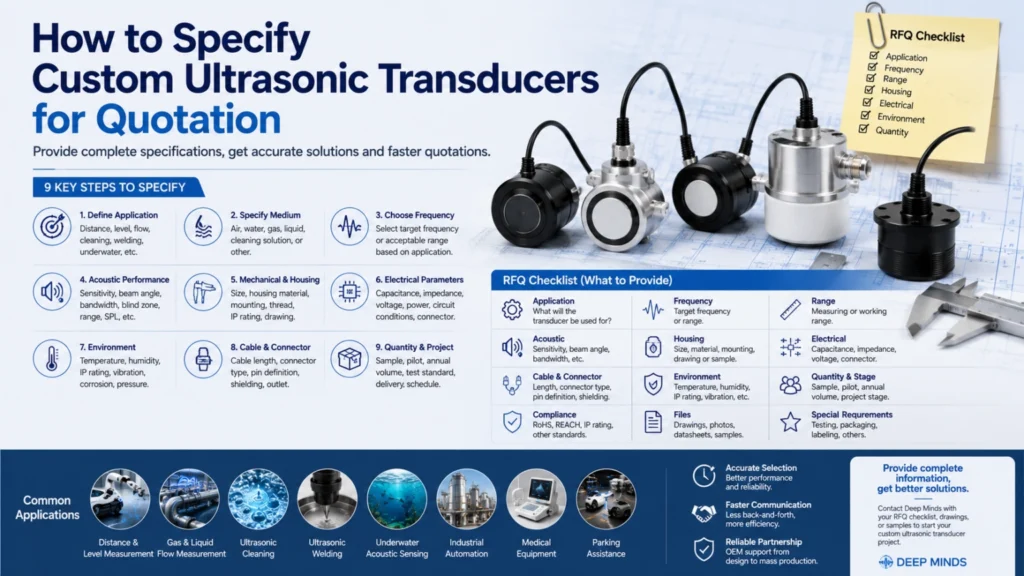
Custom ultrasonic transducer RFQ checklist showing key quotation requirements including application, frequency, range, housing, electrical parameters, environment, and quantity.

Published 2026-06-15 Updated 2026-09-30

Custom Ultrasonic Transducer: How to Specify Requirements for Quotation

A custom ultrasonic transducer quotation requires more than a frequency value, a product photo, or a short message such as “Please quote 40kHz ultrasonic transducer.” The supplier needs to understand how the transducer will be used, what medium it will work in, what acoustic performance is required, and how it will be installed in the final product.
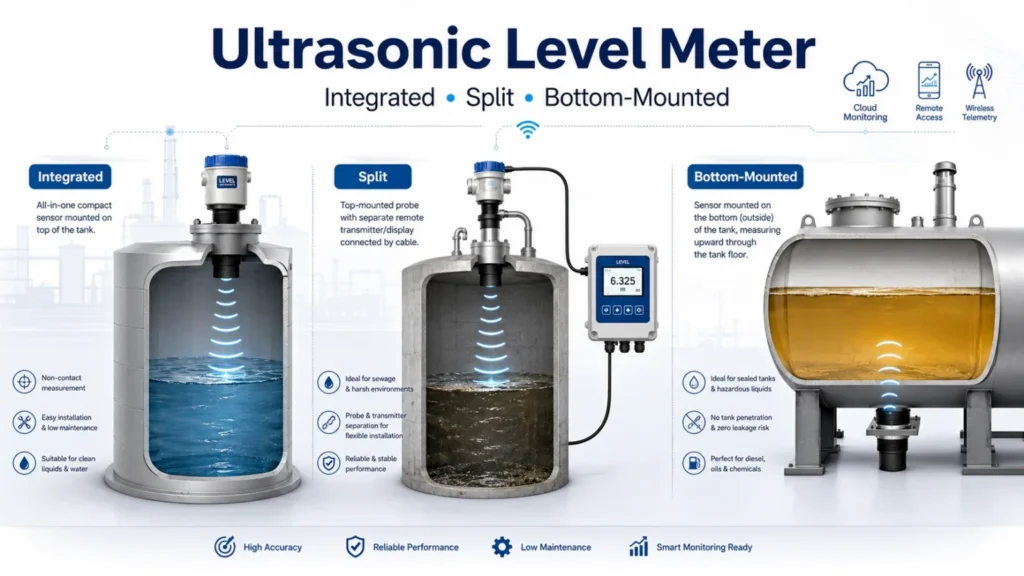
Ultrasonic level meter comparison showing integrated, split, and bottom-mounted types

Published 2026-05-26 Updated 2026-08-21

Ultrasonic Level Meter: Integrated, Split, and Bottom-Mounted Types Explained

An ultrasonic level meter is a level measurement device that uses ultrasonic sound waves to measure the distance between the sensor and the surface of a liquid or solid material. In many tank and process applications, this distance is then converted into a level value based on the tank height or installation position.

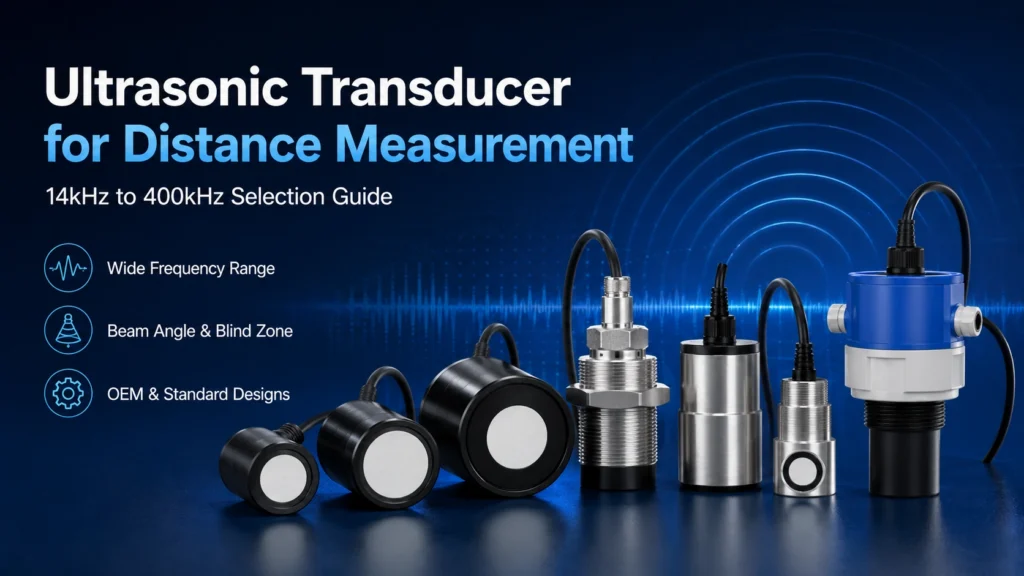
Ultrasonic transducer for distance measurement showing 14kHz to 400kHz frequency range, beam angle, blind zone, and OEM design options.

Published 2026-05-19 Updated 2026-08-21

Ultrasonic Transducer for Distance Measurement: 14kHz to 400kHz Selection Guide

An ultrasonic transducer for distance measurement is the acoustic component that converts electrical energy into ultrasonic sound waves and converts returning echoes back into electrical signals. In a distance sensing system, the transducer transmits sound into the air, receives the reflected echo from a target, and affects whether the final signal is strong and stable enough for measurement.

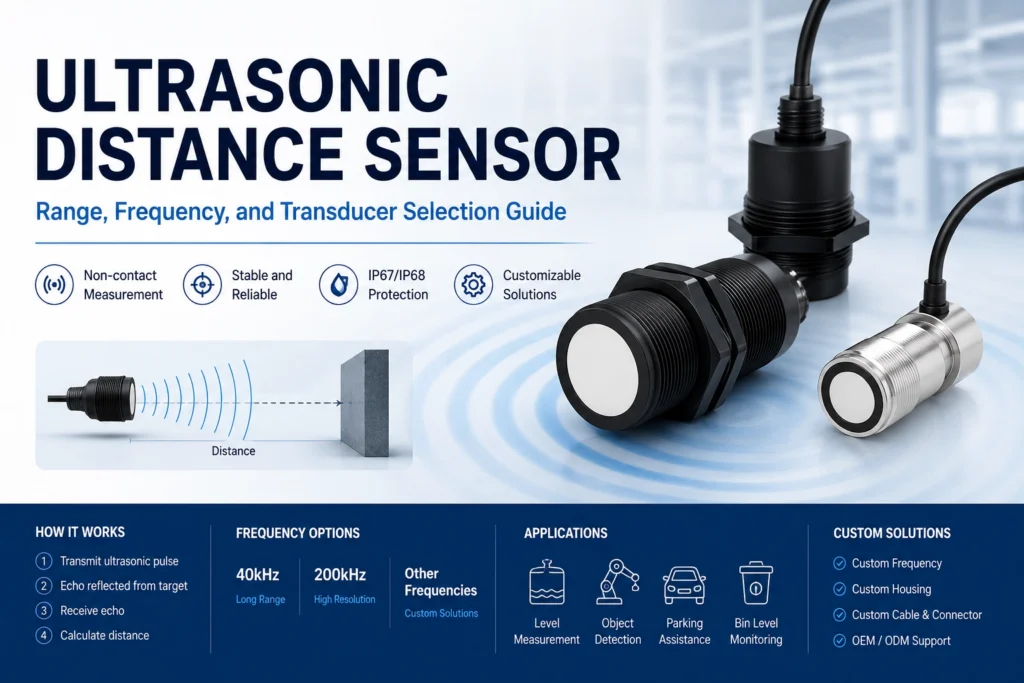
Ultrasonic distance sensor for industrial non-contact distance measurement.

Published 2026-05-07 Updated 2026-08-21

Ultrasonic Distance Sensor: Range, Frequency, and Transducer Selection Guide

An ultrasonic distance sensor is a non-contact measuring device used to detect the distance between the sensor and a target object. It works by sending ultrasonic sound waves toward the target and receiving the reflected echo. Because it does not require physical contact, this type of sensor is widely used in industrial automation, level monitoring, object detection, parking assistance, robotics, and other measurement systems.

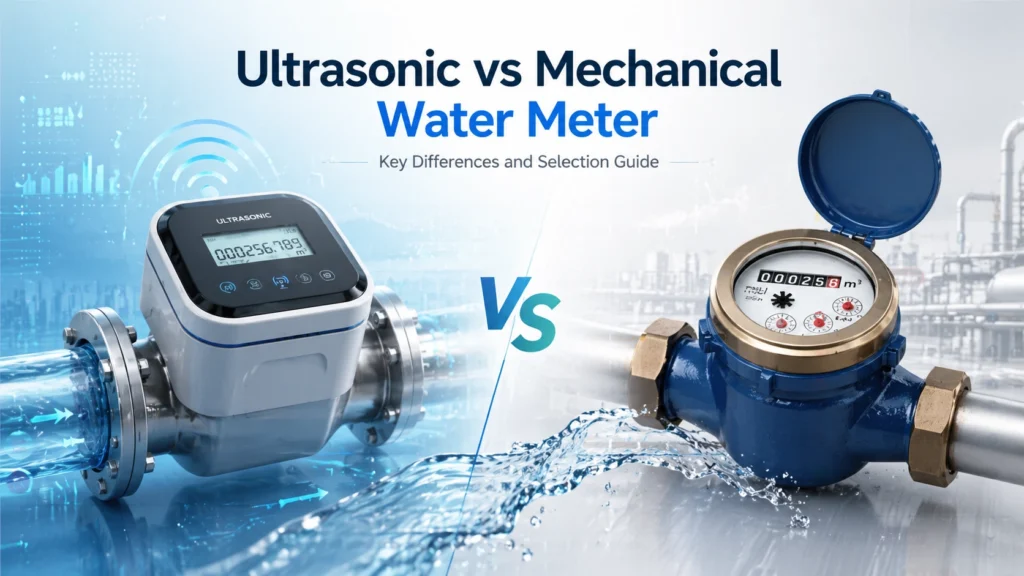
Ultrasonic water meter vs mechanical water meter comparison for smart water metering applications

Published 2026-04-30 Updated 2026-08-21

Ultrasonic Water Meter vs Mechanical Water Meter: Key Differences and Selection Guide

Choosing between an ultrasonic water meter and a mechanical water meter is an important decision for residential, commercial, municipal, and industrial water management projects. While mechanical meters have been widely used for many years, smart water networks increasingly require higher measurement stability, remote reading, leak monitoring, and lower long-term maintenance.

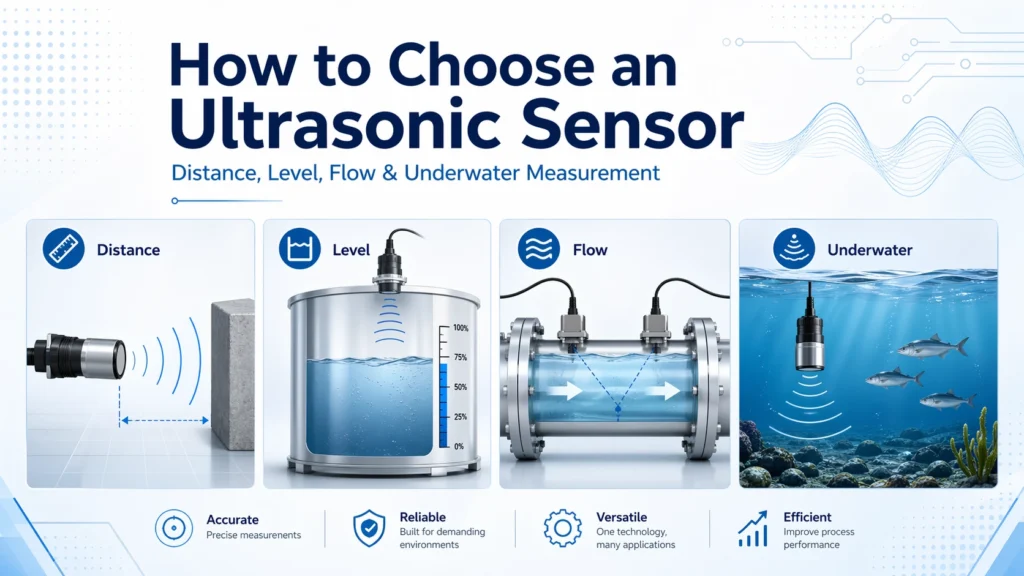
How to choose an ultrasonic sensor for distance, level, flow, and underwater measurement applications

Published 2026-04-24 Updated 2026-08-21

How to Choose an Ultrasonic Sensor for Distance, Level, Flow, and Underwater Measurement

Ultrasonic sensors are widely used in distance measurement, liquid level detection, flow metering, underwater acoustic sensing, object detection, and industrial automation. Although these applications all use ultrasonic waves, the required sensor structure, operating frequency, beam angle, housing material, output signal, and environmental protection level can be very different.

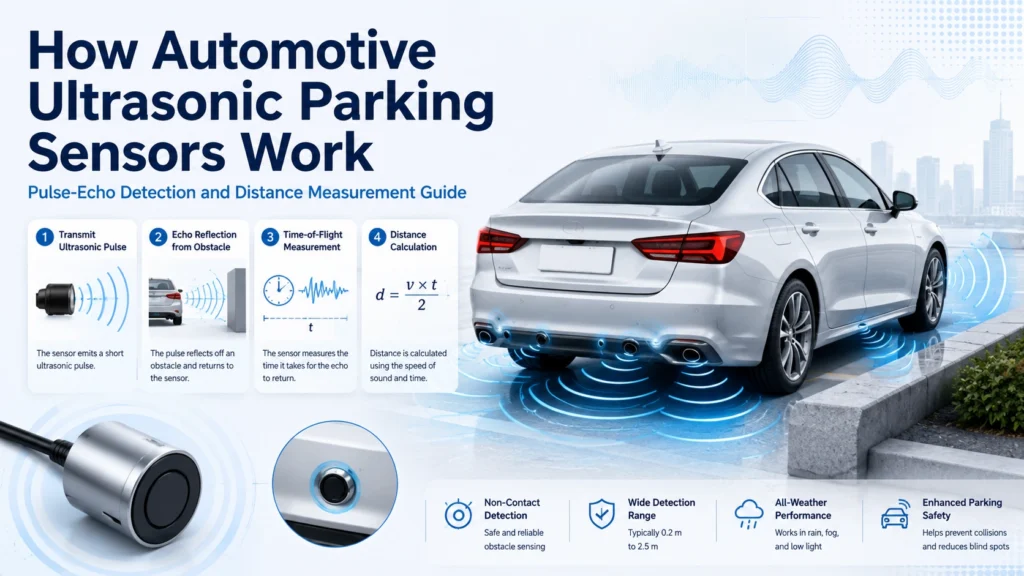
Car reversing with ultrasonic parking sensors detecting a curb and nearby obstacles behind the vehicle

Published 2026-04-16 Updated 2026-08-21

How Automotive Ultrasonic Parking Sensors Work

Automotive ultrasonic parking sensors help drivers detect nearby obstacles when reversing or maneuvering in tight spaces. They are widely used in modern parking assistance systems because they provide fast and reliable short-range obstacle detection. By sending ultrasonic waves and analyzing the reflected signals, the system can estimate the distance between the vehicle and nearby objects and warn the driver in real time.

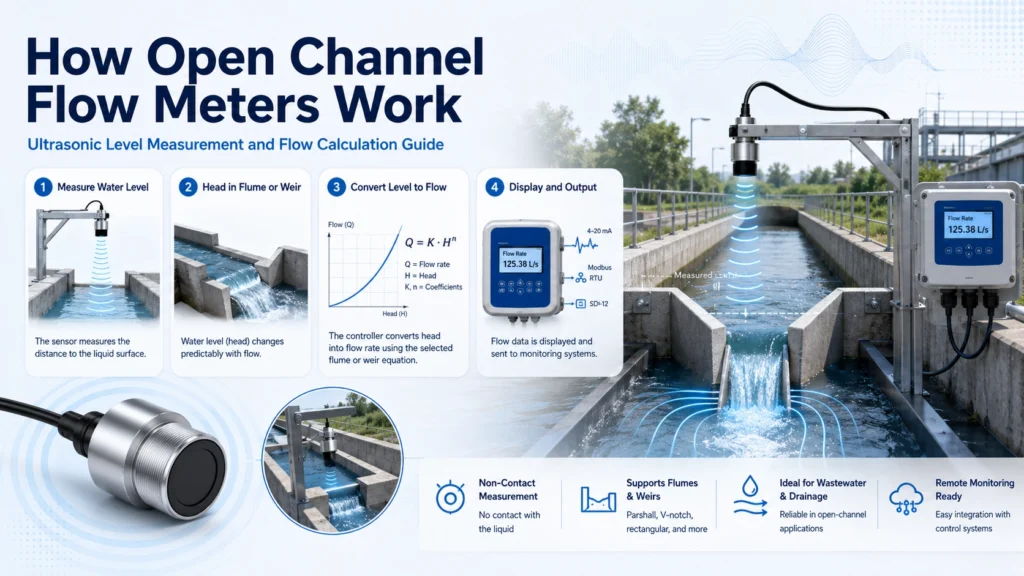
Open channel flow meter with ultrasonic level sensor installed above a flume

Published 2026-04-15 Updated 2026-08-21

Open Channel Flow Meter: Working Principle, Applications, and Benefits

An open channel flow meter is designed for applications where the liquid surface is exposed to the atmosphere, or where the pipe is not completely full. In these conditions, conventional full-pipe flow meters are often not suitable because they require the pipe to remain full during operation.

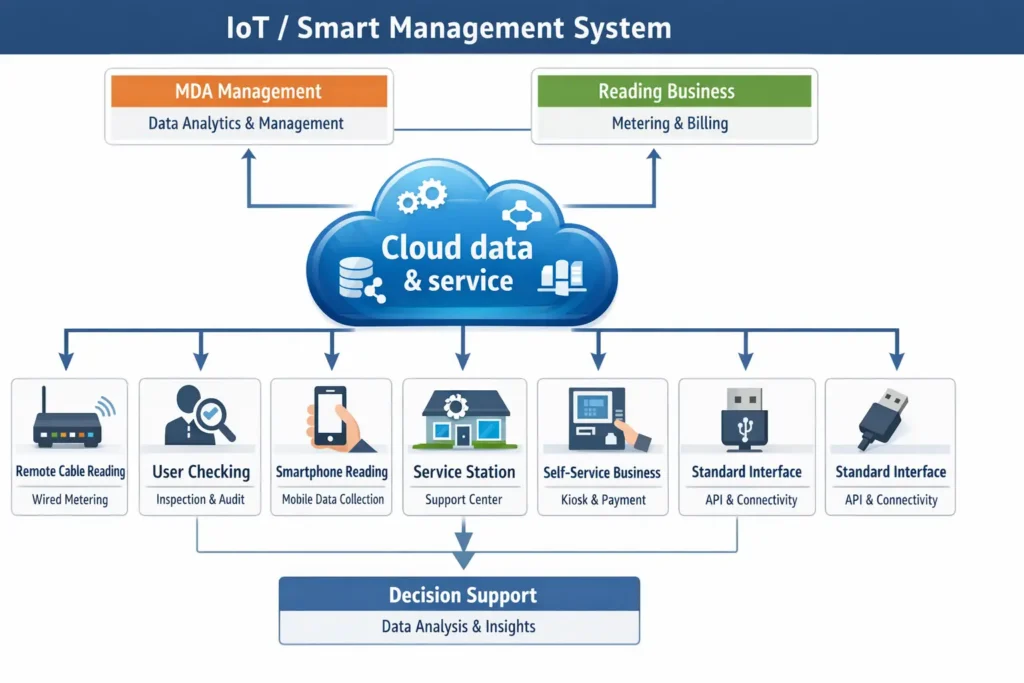
LoRaWAN smart water metering system diagram showing cloud data service, remote meter reading, smartphone reading, user checking, and decision support

Published 2026-04-06 Updated 2026-08-21

LoRaWAN Smart Water Metering Solutions for Remote Meter Reading

Smart water metering is becoming an important part of modern water management. Compared with manual meter reading, a LoRaWAN-based system can improve data collection efficiency, reduce labor workload, and support more accurate usage monitoring across residential, commercial, municipal, and industrial projects.

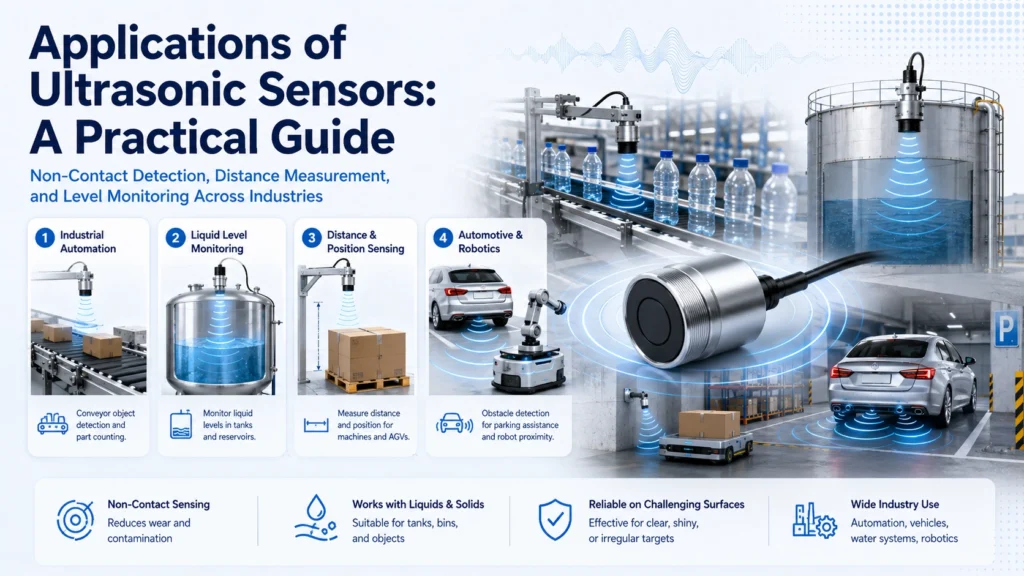
Industrial liquid level measurement as one of the applications of ultrasonic sensors

Published 2026-04-02 Updated 2026-09-30

Various Applications of Ultrasonic Sensors

An ultrasonic sensor is a non-contact sensing device that emits high-frequency sound waves and measures the time it takes for the reflected echo to return after reaching a target object. This method is commonly known as time-of-flight measurement.