Integration

Showing 1-7 of 7 articles

Category: Integration Clear filters
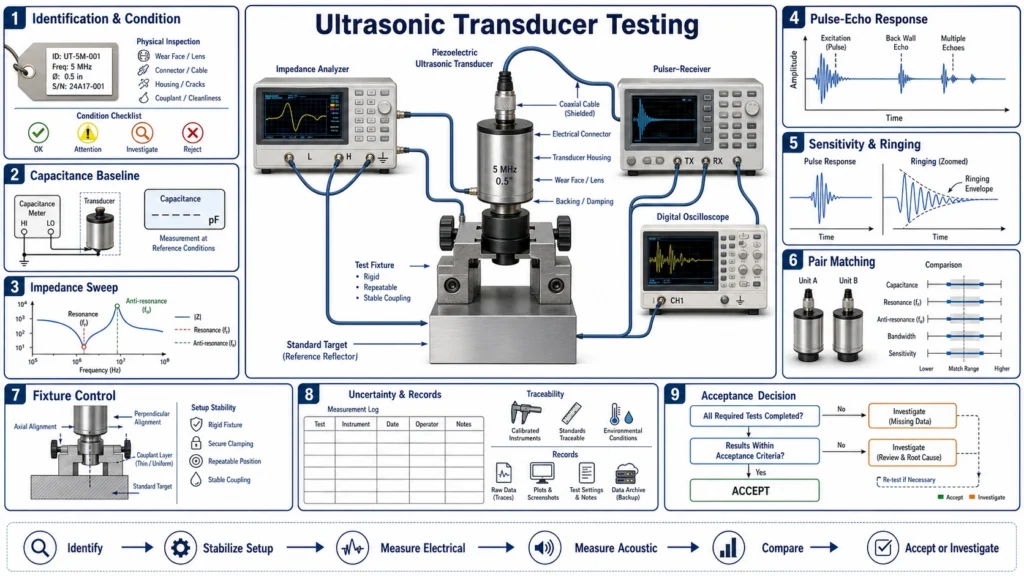
Ultrasonic transducer connected to an impedance analyzer and oscilloscope with resonance and ringing measurements

2026-08-13

How to Test an Ultrasonic Transducer: Impedance, Sensitivity, Ringing, and Pair Matching

An ultrasonic transducer cannot be accepted or rejected from its frequency label alone. “40 kHz” may describe a nominal operating region, while the measured resonance, impedance, bandwidth, sensitivity, and decay depend on construction, mounting, cable, temperature, acoustic load, and test method. A useful test plan begins with the decision it must support: incoming inspection, supplier comparison, circuit design, matched-pair selection, production screening, or failure analysis.
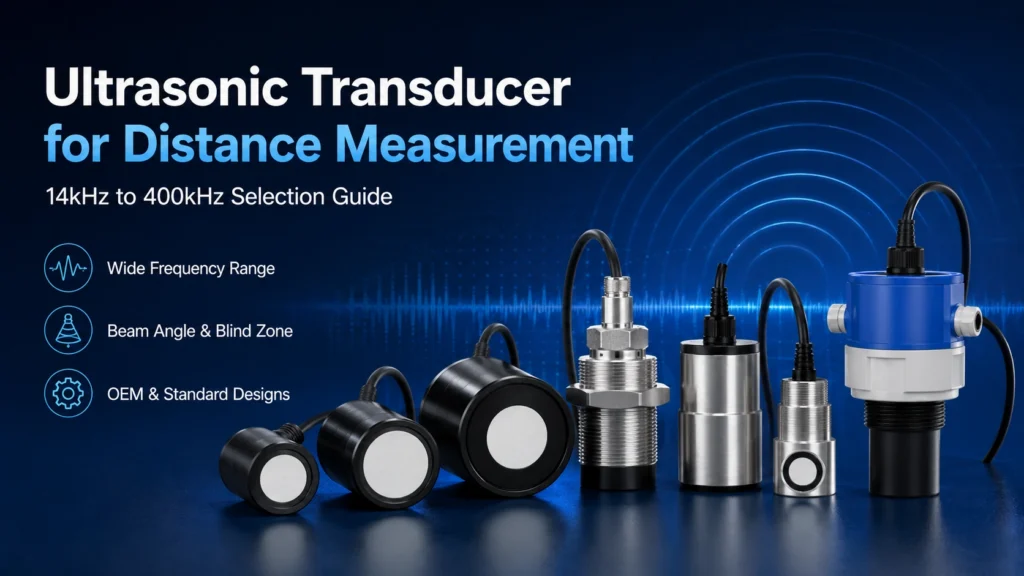
Ultrasonic transducer for distance measurement showing 14kHz to 400kHz frequency range, beam angle, blind zone, and OEM design options.

2026-08-12

Ultrasonic Transducer for Distance Measurement: 14kHz to 400kHz Selection Guide

An ultrasonic transducer for distance measurement is the acoustic component that converts electrical energy into ultrasonic sound waves and converts returning echoes back into electrical signals. In a distance sensing system, the transducer transmits sound into the air, receives the reflected echo from a target, and affects whether the final signal is strong and stable enough for measurement.

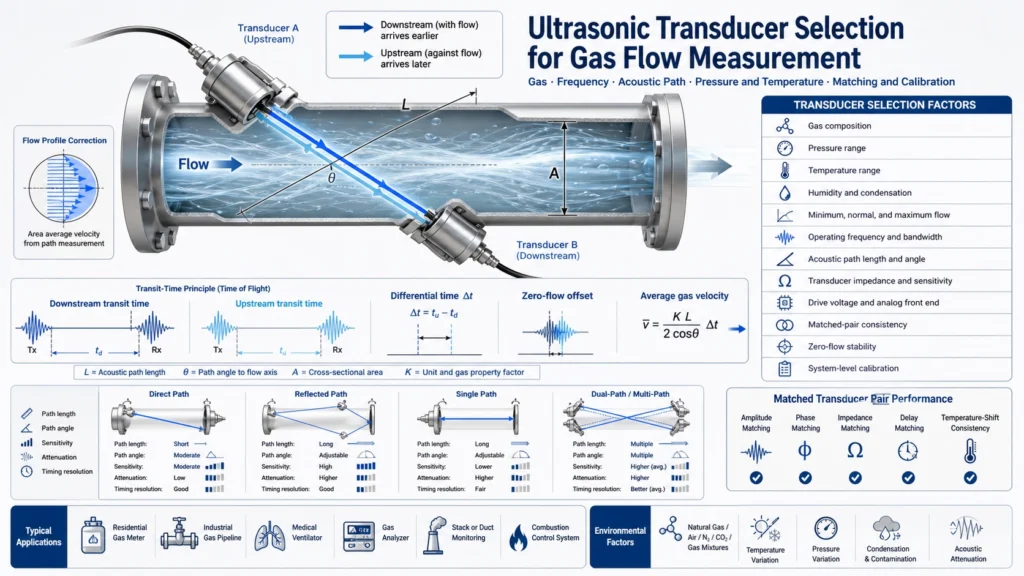
Paired ultrasonic gas flow transducers across an acoustic path with pressure and temperature compensation

2026-08-03

Ultrasonic Gas Flow Transducer Selection: Frequency, Acoustic Path, Pressure, and Temperature

Ultrasonic gas flow measurement is used in residential and commercial gas meters, industrial process lines, ventilators, analyzers, combustion systems, and stack or duct monitoring. The transducers are only one part of the system. Their suitability depends on the gas, flow tube, acoustic path, pressure, temperature, frequency, electronics, calibration method, and production consistency.

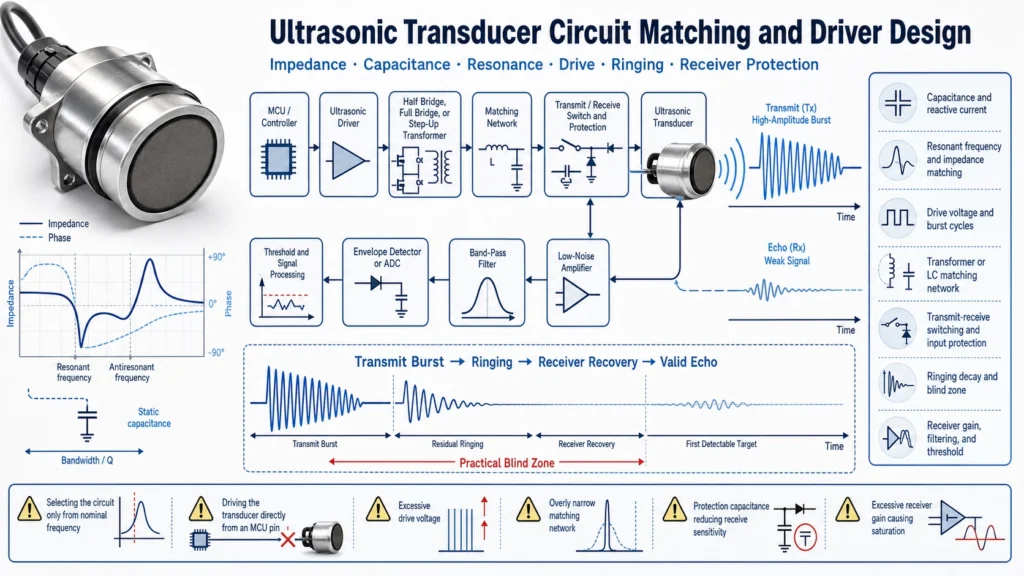
Ultrasonic transducer connected to driver matching network and receiver with ringing waveform

2026-07-30

Ultrasonic Transducer Circuit Matching: Capacitance, Resonance, Drive Voltage, and Ringing

A transducer with the correct nominal frequency is not automatically compatible with an existing circuit. Transmit strength, current demand, recovery time, receive sensitivity, blind zone, noise immunity, and long-term reliability depend on the interaction between the piezoelectric element, housing, cable, driver, matching network, transmit-receive switch, protection, analog front end, and signal-processing settings.

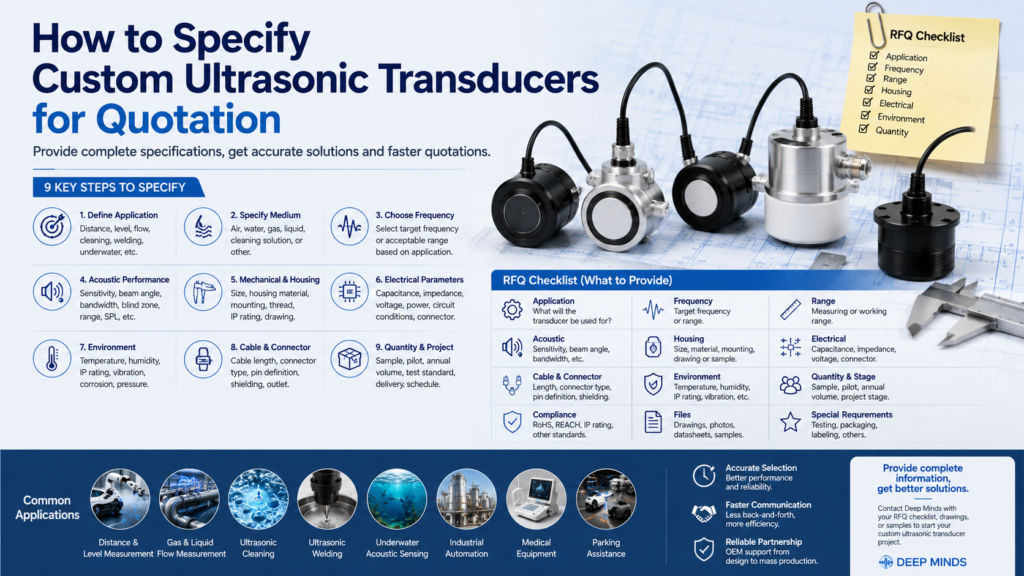
Custom ultrasonic transducer RFQ checklist showing key quotation requirements including application, frequency, range, housing, electrical parameters, environment, and quantity.

2026-06-15

Custom Ultrasonic Transducer: How to Specify Requirements for Quotation

A custom ultrasonic transducer quotation requires more than a frequency value, a product photo, or a short message such as “Please quote 40kHz ultrasonic transducer.” The supplier needs to understand how the transducer will be used, what medium it will work in, what acoustic performance is required, and how it will be installed in the final product.

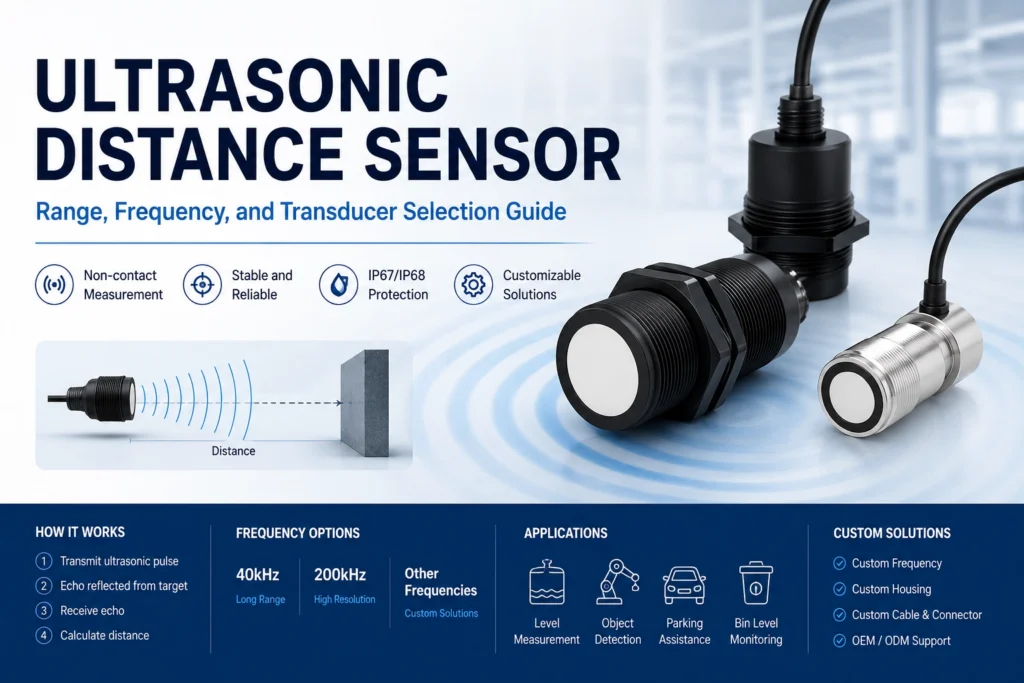
Ultrasonic distance sensor for industrial non-contact distance measurement.

2026-05-07

Ultrasonic Distance Sensor: Range, Frequency, and Transducer Selection Guide

An ultrasonic distance sensor is a non-contact measuring device used to detect the distance between the sensor and a target object. It works by sending ultrasonic sound waves toward the target and receiving the reflected echo. Because it does not require physical contact, this type of sensor is widely used in industrial automation, level monitoring, object detection, parking assistance, robotics, and other measurement systems.

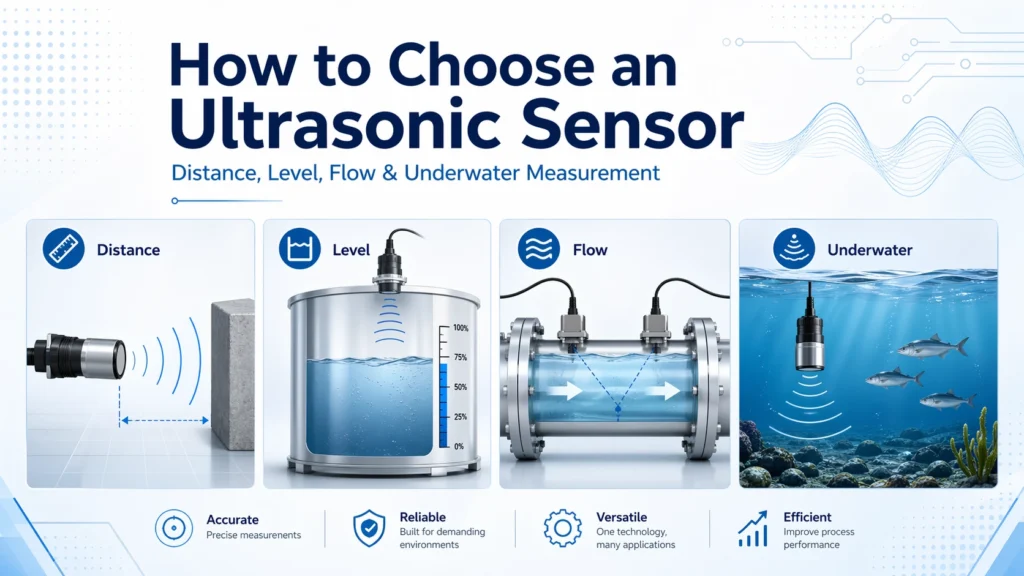
How to choose an ultrasonic sensor for distance, level, flow, and underwater measurement applications

2026-04-24

How to Choose an Ultrasonic Sensor for Distance, Level, Flow, and Underwater Measurement

Ultrasonic sensors are widely used in distance measurement, liquid level detection, flow metering, underwater acoustic sensing, object detection, and industrial automation. Although these applications all use ultrasonic waves, the required sensor structure, operating frequency, beam angle, housing material, output signal, and environmental protection level can be very different.