Blog

Ultrasonic Distance Sensor: Range, Frequency, and Transducer Selection Guide

2026-05-07

Ultrasonic distance sensor for industrial non-contact distance measurement.

What Is an Ultrasonic Distance Sensor?

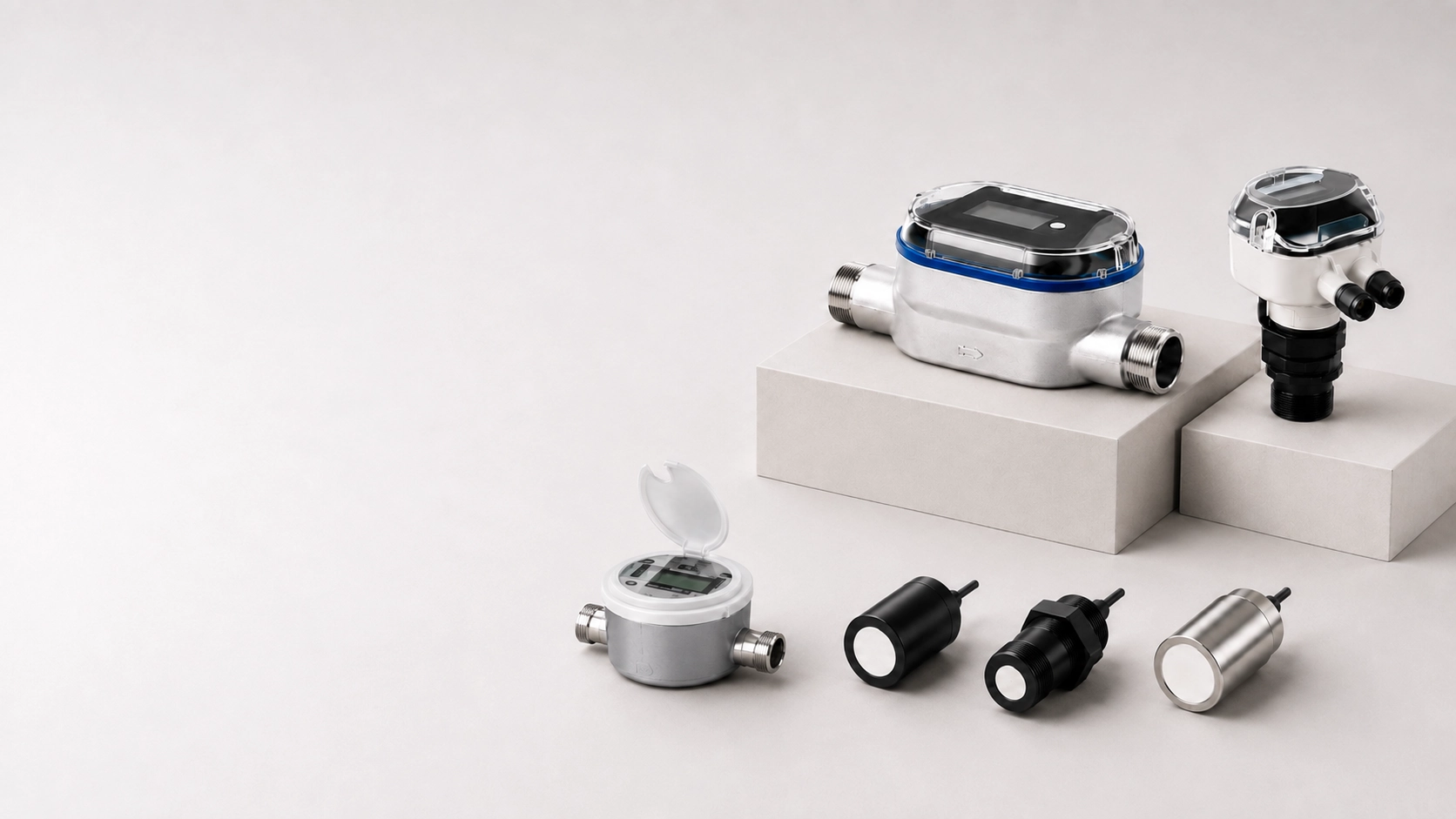
An ultrasonic distance sensor is a non-contact measuring device used to detect the distance between the sensor and a target object. It works by sending ultrasonic sound waves toward the target and receiving the reflected echo. Because it does not require physical contact, this type of sensor is widely used in industrial automation, level monitoring, object detection, parking assistance, robotics, and other measurement systems.

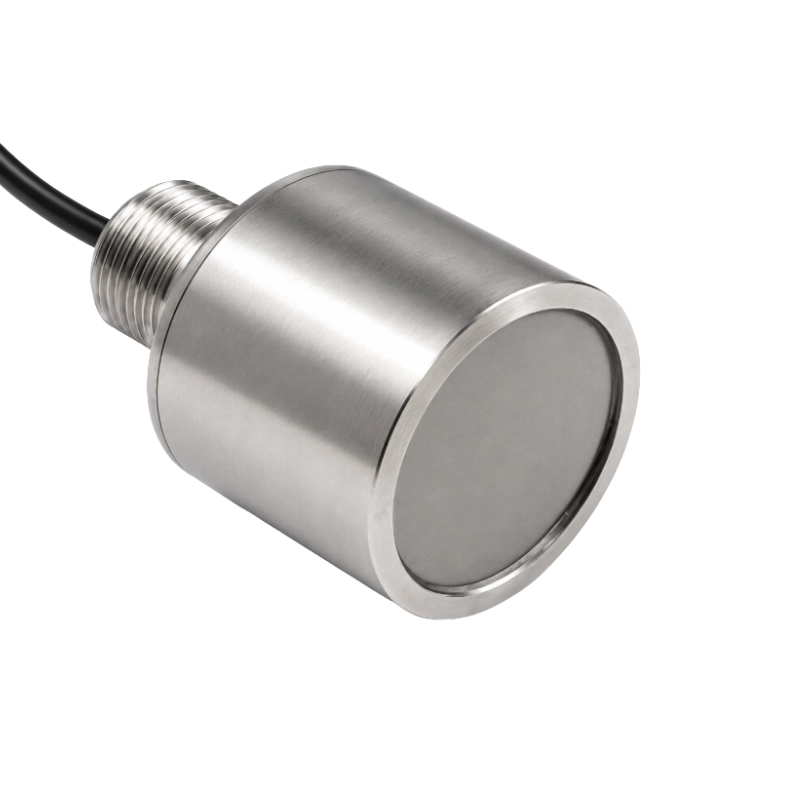
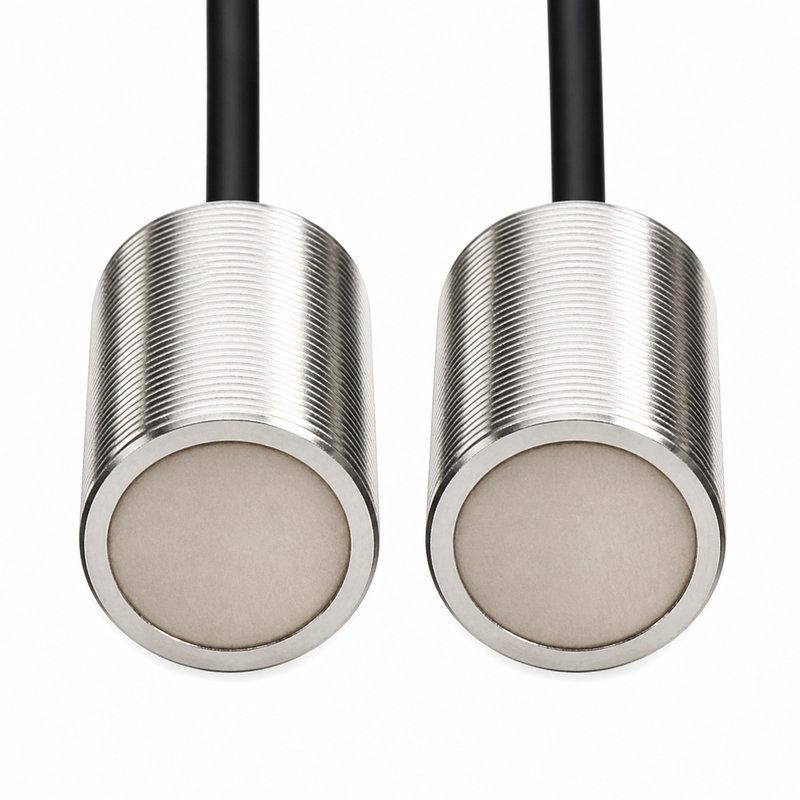
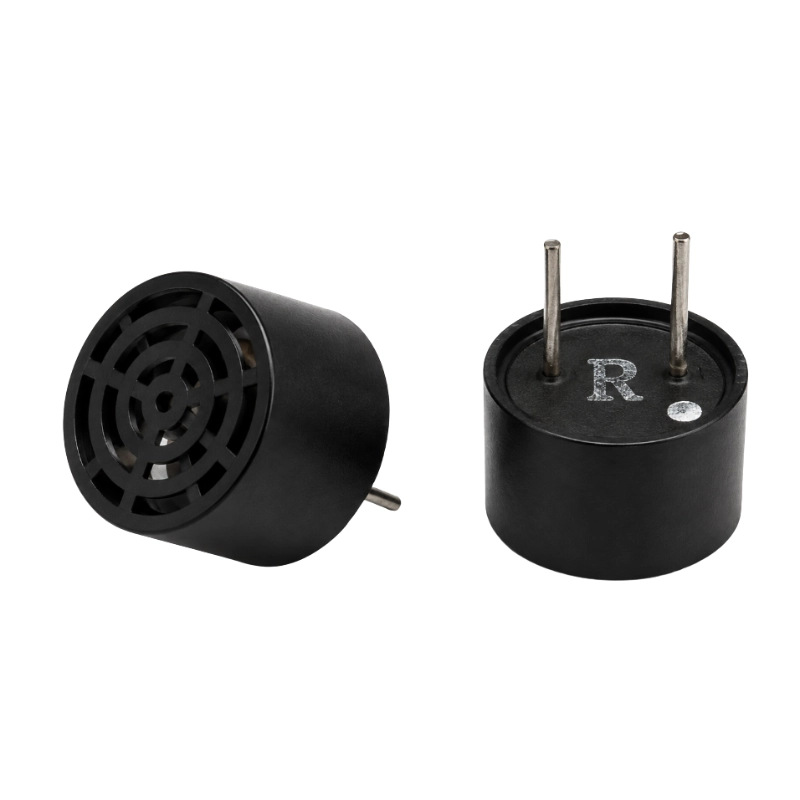
In many designs, the core acoustic component is the ultrasonic distance transducer. The transducer converts electrical energy into ultrasonic vibration during transmission and converts the reflected acoustic signal back into an electrical signal during reception. In other words, the sensor is usually the complete measuring unit, while the transducer is the key component that generates and receives the ultrasonic wave.

For engineers and buyers, understanding this difference is important. If you are selecting a complete measuring module, you may focus on output signal, housing, installation method, and power supply. If you are designing your own device, you may need to select or customize the ultrasonic distance transducer itself. For a broader selection overview, you can also read our guide on how to choose an ultrasonic sensor.

How Ultrasonic Distance Measurement Works

Ultrasonic distance measurement is usually based on the time-of-flight measurement principle. The measuring process is simple in concept: the ultrasonic transducer emits a short ultrasonic pulse, the sound wave travels through air, the wave reflects from the target surface, and the receiver detects the returning echo.

The distance is calculated from the travel time of the sound wave. Because the signal travels from the sensor to the target and then back to the sensor, the measured time must be divided by two:

Distance = Speed of sound × Time of flight / 2

This principle makes an ultrasonic distance sensor suitable for non-contact distance measurement in many environments. However, actual performance depends on the target surface, measuring range, beam angle, temperature, humidity, dust, airflow, and the sensitivity of the ultrasonic transducer. These factors should be reviewed before choosing a standard or custom component.

Ultrasonic Sensor Range: What Affects Detection Distance?

Ultrasonic sensor range is one of the most important specifications in distance measurement applications. It defines the minimum and maximum distance over which the sensor can detect a target reliably. A longer range does not always mean better performance. The correct range depends on the target size, target material, installation space, required accuracy, and environmental conditions.

Several factors affect ultrasonic sensor range:

FactorImpact on Detection Distance
FrequencyLower frequencies often support longer detection distance, while higher frequencies are often used for shorter range and finer resolution.
Target surfaceHard, flat, and perpendicular surfaces reflect stronger echoes than soft, angled, curved, or irregular surfaces.
Transducer sensitivityHigher sensitivity can improve echo detection, especially for weak reflections or longer measuring distances.
Beam angleA wider beam covers a larger area, while a narrower beam provides better directionality and reduces unwanted reflections.
EnvironmentTemperature, humidity, vapor, dust, airflow, and acoustic noise can influence signal propagation and stability.
Blind zoneThe blind zone defines the minimum distance where stable measurement is not possible.

When selecting an ultrasonic distance sensor, the required measurement range should be defined together with the minimum detection distance, target type, and installation angle. For example, a tank level monitoring application may require stable detection over liquid surfaces, while an industrial object detection system may need fast response to moving targets.

Frequency Selection: 40kHz, 200kHz, and Higher-Frequency Transducers

Frequency has a direct influence on range, beam pattern, resolution, and attenuation. In many air-based distance measurement applications, a 40kHz ultrasonic transducer is commonly used because it provides a practical balance between detection distance, cost, and signal strength. It is often found in parking sensors, object detection systems, general distance measurement, and industrial sensing equipment.

A 200kHz ultrasonic transducer is usually selected when the application requires shorter-range measurement, smaller structure, improved resolution, or more controlled acoustic performance. Compared with lower-frequency designs, higher-frequency transducers may provide more detailed measurement behavior, but they also experience stronger attenuation in air. This means the practical measuring distance may be shorter.

For ultrasonic transducer frequency selection, buyers should not choose frequency based only on a catalog number. The selection should consider the required range, beam angle, target size, resolution, environmental conditions, and mounting structure. Deep Minds provides different ultrasonic transducers and sensors for distance measurement, level measurement, flow measurement, and other industrial applications.

Frequency TypeTypical UseSelection Notes
40kHz ultrasonic transducerGeneral distance measurement, parking sensors, object detectionOften suitable for longer air-based detection distances and wider sensing coverage.
200kHz ultrasonic transducerShorter-range measurement, compact devices, higher-resolution applicationsOften used where more controlled measurement is required over a shorter range.
Higher-frequency transducersSpecialized sensing, short-distance detection, fluid-related measurementShould be selected according to acoustic medium, target condition, and system design.

Ultrasonic Sensor Beam Angle and Blind Zone

Ultrasonic sensor beam angle describes the acoustic coverage area of the transmitted sound wave. It affects how wide the detection field is and how likely the sensor is to receive unwanted reflections from nearby objects. A wide beam angle can be useful when the target is large or when exact alignment is difficult. A narrow beam angle is usually preferred when the application needs more directional measurement.

The blind zone is another key parameter. It refers to the area directly in front of the transducer where stable measurement is not possible. This happens because the transducer requires time to finish transmitting and settle before it can reliably receive the returning echo. If the target is inside the blind zone, the echo may not be measured correctly.

For an ultrasonic distance sensor, beam angle and blind zone should be evaluated together with the measuring range. A sensor with a long maximum range may still be unsuitable if the blind zone is too large for the installation space. Similarly, a sensor with a wide beam may cause false detection if it is installed near tank walls, machine frames, pipes, or other reflective structures.

ParameterWhy It Matters
Ultrasonic sensor beam angleDetermines the acoustic coverage area and the chance of detecting nearby objects.
Blind zoneDefines the minimum distance where stable detection can begin.
Target sizeA larger target usually produces a stronger echo than a small or narrow target.
Mounting directionIncorrect angle can weaken the reflected echo and reduce measurement stability.

Common Applications of Ultrasonic Distance Sensors

Ultrasonic distance sensors are used when non-contact detection is required and the target surface can reflect sound waves effectively. They are especially useful in applications where optical sensors may be affected by color, transparency, light, or surface contamination.

Common applications include:

  • Industrial object detection: detecting boxes, parts, pallets, moving objects, and machine positions.
  • Tank level monitoring: measuring the distance from the sensor to the liquid or material surface.
  • Water level measurement: monitoring water tanks, channels, reservoirs, and treatment systems.
  • Parking assistance: detecting obstacles around vehicles or parking equipment.
  • Robot obstacle avoidance: helping mobile robots detect nearby objects.
  • Bin and container monitoring: measuring fill level in containers, waste bins, or storage vessels.
  • Automatic door and safety systems: detecting presence or movement in a defined area.

In these applications, ultrasonic distance sensors must be selected according to range, target condition, beam angle, response speed, output signal, and environmental protection. For more examples across different industries, see our article on ultrasonic sensors for industrial applications.

How to Choose an Ultrasonic Distance Transducer

Selecting the right ultrasonic distance transducer is not only a matter of frequency. The final performance depends on acoustic design, electrical matching, housing structure, installation conditions, and the complete sensing circuit. Before requesting a quotation or selecting a standard model, buyers should define the application requirements as clearly as possible.

SpecificationWhat to Confirm
ApplicationDistance measurement, object detection, level monitoring, parking assistance, or other use.
Measurement rangeMinimum and maximum detection distance required in the actual installation.
FrequencyRequired operating frequency, such as 40kHz, 200kHz, or another frequency.
Beam angleWide beam or narrow beam requirement based on target size and installation space.
Blind zoneMinimum measurable distance allowed by the system design.
HousingOpen type, enclosed type, waterproof structure, threaded housing, or custom mechanical design.
EnvironmentTemperature, humidity, dust, vapor, water exposure, airflow, and acoustic noise.
Electrical designImpedance, capacitance, sensitivity, drive voltage, and matching requirements.
QuantityPrototype, trial production, or mass production demand.

If your product requires a special housing, cable, connector, frequency, or waterproof design, a custom ultrasonic transducer may be more suitable than a standard part. This is especially common for OEM devices, industrial equipment, level meters, parking sensors, and other embedded measurement systems.

Custom Ultrasonic Transducers for Distance Measurement

Deep Minds can support custom ultrasonic transducer development for distance measurement applications. Customization may include operating frequency, sensitivity, beam angle, housing structure, waterproof grade, cable length, connector type, mounting method, and electrical parameters. For OEM projects, the transducer can also be designed around the customer’s mechanical structure and circuit requirements.

Temperature compensation may also be important in distance measurement systems. The speed of sound changes with temperature, which can influence measurement accuracy. Technical references such as the “Ultrasonic Sensors: Types, Applications and Solutions for Accurate Measurement and Detection” explain why environmental conditions should be considered when designing precise ultrasonic measurement systems.

When requesting a quotation for an ultrasonic distance transducer, it is helpful to provide the application, measurement range, target material, working environment, frequency preference, housing requirements, electrical parameters, and estimated quantity. Clear specifications help the supplier recommend the correct design more efficiently and reduce unnecessary sampling cycles.

FAQ About Ultrasonic Distance Sensors

What is the typical range of an ultrasonic distance sensor?

The typical range depends on frequency, transducer sensitivity, target size, beam angle, and environmental conditions. Some sensors are designed for short-range detection, while others can measure over longer distances. The required ultrasonic sensor range should be defined according to the actual application rather than selected only from a catalog value.

What frequency is best for ultrasonic distance measurement?

There is no single best frequency for all applications. A 40kHz ultrasonic transducer is often used for general air-based distance measurement and object detection. A 200kHz ultrasonic transducer may be selected for shorter-range or higher-resolution applications. The final choice should consider range, resolution, beam angle, attenuation, and installation structure.

What is the difference between an ultrasonic distance sensor and an ultrasonic distance transducer?

An ultrasonic distance sensor usually refers to a complete measuring unit or module. An ultrasonic distance transducer is the acoustic component that sends and receives ultrasonic waves. The transducer is a key part of the sensor, but it may require additional electronics, housing, and signal processing to become a complete sensing product.

Can ultrasonic distance sensors work outdoors?

Yes, but outdoor use requires attention to waterproofing, temperature changes, wind, rain, dust, sunlight exposure, and mounting stability. For outdoor or harsh industrial environments, the housing design, IP rating, cable sealing, and acoustic structure should be reviewed carefully.

Can Deep Minds provide custom ultrasonic transducers?

Yes. Deep Minds can provide custom ultrasonic transducer solutions based on frequency, range, housing design, waterproof requirements, cable and connector structure, and OEM application needs. Providing detailed specifications at the beginning of the project helps improve selection accuracy and quotation efficiency.